
In preparation for a long-planned trip to London in early 2020, I started reading Conn Iggulden’s Wars of the Roses series. I made it through the first two volumes before the trip and started the third – just before COVID hit. At the time, I found myself more interested in rereading The Stand and The Andromeda Strain than in continuing with The Wars of the Roses. But six years later, I’ve come back to finish what I started.
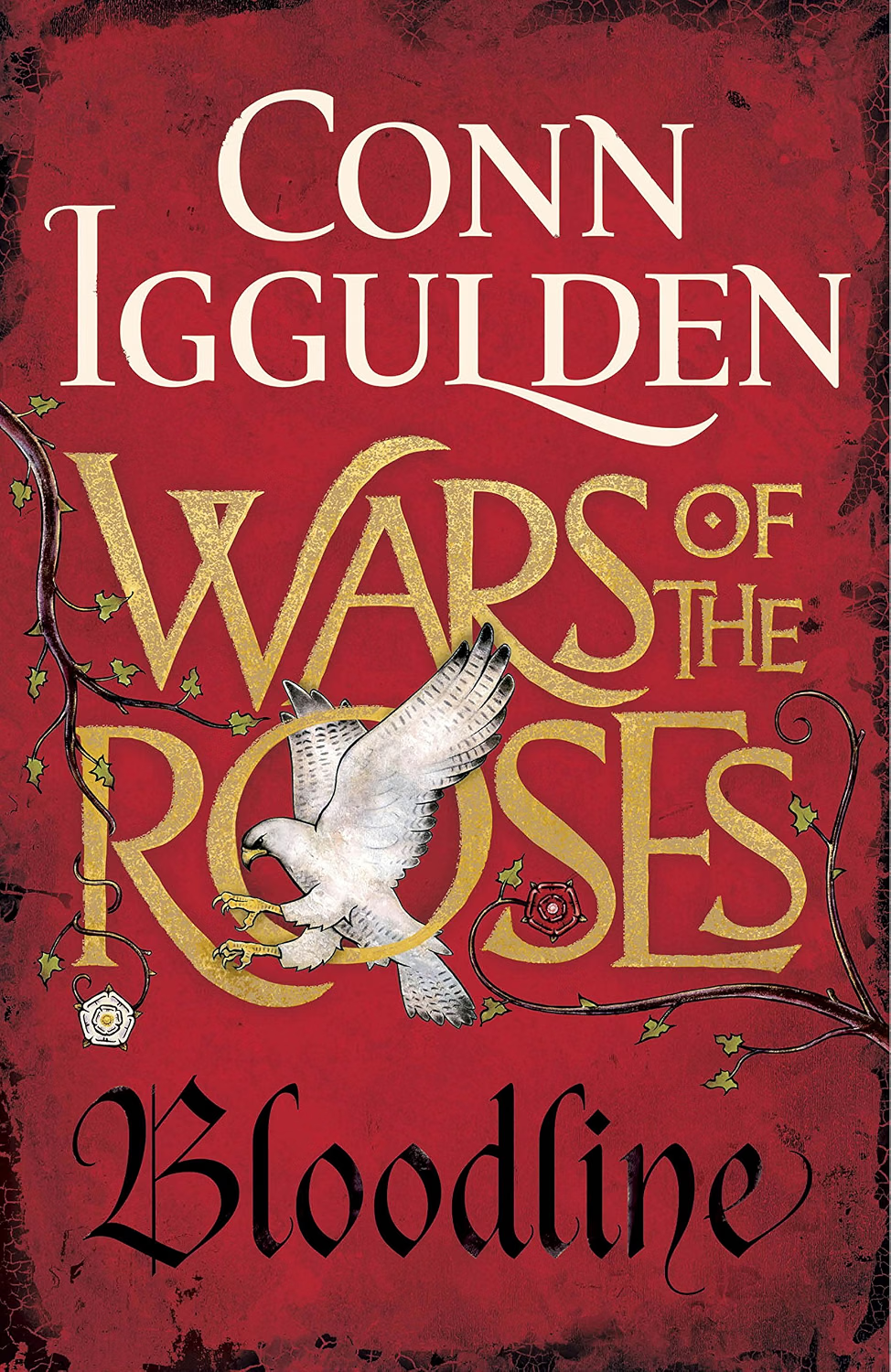
The first thing I had to do was reread the first two books, and I enjoyed them even more the second time around, especially after having visited the Tower of London. I reviewed both books back in 2020, but given how much time has passed, I thought a quick recap was in order before discussing the third book in the series: Wars of the Roses: Bloodline.
In many ways, the Wars of the Roses centered around Henry VI, the son of England’s most famous battle king, Henry V, the victor of Agincourt. Henry VI was nothing like his father. Portrayed as gentle and pious, and at times weak and simple, he suffered from a mysterious illness that left him incapable of ruling for extended periods. His situation echoes the famous quote from Ecclesiastes:
“Woe to thee, O land, when thy king is a child …”
Had Henry been a healthier man and a stronger king, the Wars of the Roses might never have happened.
Recap of Stormbird and Margaret of Anjou
Iggulden explores the Wars of the Roses through four books. The first one, Wars of the Roses: Stormbird, explores the origins of the wars. It begins with a scheme to forge a truce with France and end the Hundred Years’ War by marrying Henry to the French king’s niece, Margaret of Anjou, in exchange for England surrendering Maine and Anjou. That plan ended disastrously, leading to the French reclaiming most of Normandy. This sparked popular uprisings in England and earned the enmity of the powerful Duke of York, who governed Normandy. Ultimately, it would give rise to the first of the famous wars between the White Rose of York and the Red Rose of Lancaster.
In the second book, Wars of the Roses: Margaret of Anjou, Margaret now leads the Lancasters, determined to protect her young son and her disabled husband at all costs. The innocent Margaret of the first book has become consumed by a powerful sense of vengeance and a fierce desire to defend her family. She becomes a strong yet hardened queen whose decisions have unintended – and disastrous – consequences. Book two chronicles the first bloody battles of this civil war between York (led by Richard, Duke of York) and Lancaster and ends with an apparent decisive victory for one side.
If you haven’t read Margaret of Anjou or know the history of the Wars of the Roses, some spoilers are bound to follow.
Review of Wars of the Roses: Bloodline
At the end of the previous novel, as Margaret of Anjou celebrated her victory over the Duke of York and the Earl of Salisbury, Richard of York warned her that all she had done was unleash their sons. He was speaking of his son, Edward of York, and his nephew, Richard Neville, Earl of Warwick, who would become known as “The Kingmaker.” In Wars of the Roses: Bloodline, York’s warning comes true.
Edward of York and the Earl of Warwick take center stage in this novel, which sees the fortunes of the White Rose rise to new heights. Edward is depicted as a giant of a man, nearly unbeatable in battle, but also brash, naïve, and reckless. His cousin, Warwick, is more cunning and calculating, though even that does not save him from making terrible decisions that would change the course of English history.
Indeed, the consequences of terrible decisions are a recurring theme throughout the Wars of the Roses. Had Margaret, York, and Warwick made wiser choices, England might have been spared one of the bloodiest civil wars in its history.
Margaret is desperate to save her son (the heir to the throne) and her husband, Henry. But after she allies with the Scots and lets her army ravage the land, many in England turn against her. Instead, they look to Edward of York, whose coronation early in the novel leaves the land with two rival kings and sets up what is often considered the bloodiest battle ever fought on English soil.
The battle scenes in this book are extremely well done, and Iggulden does a terrific job of capturing the desperation of war. His depiction of the Battle of Towton is particularly gripping, bringing to life the brutality of medieval warfare and the terrible cost of the struggle for England’s crown. The Wars of the Roses swing like a pendulum, with each side tasting victory at times, only to experience bitter, crushing defeat next. And even when it seems as if one side has won, another terrible decision sets the pendulum in motion again.
Edward’s secret marriage to Elizabeth Woodville – the protagonist of Philippa Gregory’s The White Queen (portrayed by the amazing Rebecca Ferguson in the Starz series based on that novel) – adds a new dimension to the story. The young king is smitten with his older wife, a widow of considerably lower rank than a king would ordinarily marry, who is determined to ensure her family rises to the top of English society. And she views the powerful House of Neville, led by the Earl of Warwick, as her greatest threat.
The political machinations depicted in this novel inspired George R.R. Martin’s A Game of Thrones, and if you loved those stories, you will enjoy Iggulden’s take on how the conflict played out in our own world. With its memorable characters, shifting alliances, and harrowing battles, Bloodline is an excellent addition to this historical epic. There is one more volume in the series – Wars of the Roses: Ravenspur – and I’m already immersed in the conclusion to this remarkable tale.